

Hi guys,
Someone asked if there was a recorded failure of a Petzl ID, well I would not find any, but here is what I did find. (By the way, I am still a fan of the Fisk.) I thought it might be a good idea to put something out while everyone is thinking about it. This really is just a quick update for all of you.
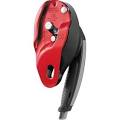
Petzl ID needs to have the rope it was made for, specifically. You can’t just put any size rope in there. So you need to plan ahead! I think most guys would do this, but making a point. When you go to the site for a job, big or small, have a plan for the job itself but also, think of a rescue in case it’s needed. If you have 3 different size ropes, you may want to take that into consideration when climbing. Safety works better when there is a plan. Accidents are not planned, but maybe they can be made less dangerous if you have a plan. We can’t control everything, but we can be ready for most things. Just don’t be stupid!
For these updates, I have links in here, so go look for yourself before you start yelling at me. If you have feedback, I would love to hear it.
The Petzl I’d is very reliable, only one report, completed by IRATA Health and Safety Committee, at http://www.irata.org/safety_notices/Safety%20Bulletin%2021.1%20-%20Rescue%20training%20incidents.pdf that I found, from July of 2011. This was a test and they found fault, user and hardware due to other circumstances for the faults. Uncontrolled descent using the Petzl I’D and Shunt the ID would not slow the descent enough during a rescue, details are in the report but both rescuer and casualty had broken ankles from hitting the ground too hard. If you would like to see more, then read the report. Please note this was during a training exercise and indicates that it was probably been operator error. If you read incident 1 the rescuer failed to release the cord on the Shunt.
Here is a video on a faulty Petzl I’D but who know what was done to it. http://youtu.be/yCleXXM2qAg
From Treestuff here is a document showing slippage on different devices, pretty interesting. https://www.treestuff.com/store/images/pdf/Rocker%20test%20comparisons.pdf
So one more link for you from the UK, http://www.axiomndt.co.uk/wp-content/uploads/2011/03/Rope-Access-Equipment-Descenders-and-Back-Up-Devices.pdf if you’re interested.
Now, with all of that said, the Petzl I’D appears to have become the industry standard for controlled descent. Although in the USA you have a choice, from what I am told is that in Canada you need to learn to use the Petzl ID. Someone said they swear by the Rescue 8. No matter what your weapon of choice is, make sure you have the skills. I say this again and again but train and train and then practice. That could be the difference between a rescue that is successful and failed. Practice may make you perfect or not, but more importantly it will make you confident is using your equipment. If you are confident and can get it together quickly, that would be better for everyone. Repetition helps make us a better player.
Also, keep the statistic in mind when you are working, http://www.propublica.org/article/cell-tower-work-fatalities-methodology This is still one of the most dangerous things you can do and you need to be careful no matter what you have with you in the air and you should always be ready to rescue someone!
Remember to like me on Facebook. Visit my page to get more links, I try to post almost everyday.
When I put these out, please take a moment to look at what the Hubble Foundation is doing for the families of the fallen.

 Smarter Tech Solutions